Why Matt Herzberger only needs iPostal1 for digital mail at The Union Hall

Matt Herzberger runs three locations ofThe Union Hall Workspace in Amarillo, Texas, and he does it alongside a full-time job.
His path into coworking started the way it does for a lot of operators: as a remote worker who couldn't stand another day at the kitchen table. But his journey into coworking ownership was much more unique.
"I'd lived all over the US and was familiar with coworking, but I'd never really been a member anywhere," Matt says. "When I moved to Amarillo about ten years ago, I didn't know many people, and I was working remotely. Sitting at home by myself all day wasn't going well."
He found the space he now owns and signed on early. "I was probably their third or fourth member. I'm part of the OG crew, so to speak."
He stayed close to the business for years before he ever held the keys.
"Over lunch one day, the previous owner told me her heart wasn't in it anymore," Matt recalls. "The next morning, I made her an offer. I think she trusted me to take her baby and keep it going, because I was already invested in the place as a member."
Running a growing business in the hours around a full-time job sets a hard rule for every service he offers: if it doesn’t mostly run itself, it doesn't last.
Nothing shows that rule in action like the way he handles mail.
How Matt Herzberger took The Union Hall from in the red to profitable in a matter of months

The handoff of The Union Hall came with a problem on the balance sheet: Matt inherited a business that was spending more than it brought in, during the pandemic—one of the hardest stretches the industry has faced.
"The space was slightly in the red when I took over," he says. "I turned that around in about a month or two."
He did it by questioning the assumptions baked into the business.
"I rethought the pricing strategy, because the price points weren't right for the level of service we were delivering," Matt explains. "I got more intentional about marketing so I could fill seats, and I went after non-traditional revenue streams. Mail servicing was one of them."
None of it was tidy at first.
"There was some throwing spaghetti at the wall early on, but I figured out the revenue paths that worked pretty quickly," he says.
The instinct that pulled him through that period, testing fast and keeping only what worked, became the operating habit behind everything that followed, including how he chose a mail partner.
Why The Union Hall benefited from adding revenue that doesn't depend on square footage
A coworking space can only sell so many desks. Matt understood early that growth tied solely to square footage has built-in limitations, so he hunted for income that didn't.
Digital mail was his own idea, and he chased it the way he chases anything new.
"When I jump into something, I become a student of it," Matt says. "I spend a lot of time in the different communities, soaking things up like a sponge, going to conferences and Facebook groups, learning as much as I can."
That research told him mail servicing could add a revenue line that grew without adding square footage, which made it worth a serious test.
So, he tested it the only way he knew how: by running several providers at once and watching what each one demanded of him.
Why three mail providers became too much to manage, and why he narrowed down to one
At his busiest, Matt juggled three different digital mail providers at the same time. Each one taught him something about what he couldn't tolerate.
"At one point, I was working with three different providers," he says. "Some offered high volume but poor quality. Others took an extreme amount of work on my part to get anything out of the service.”
The volume looked good on paper, but the hours behind it didn't fit an operator who already had a full-time job waiting every morning.
His standard hardened the busier he got.
"These days, mail providers contact me, and if it's not quick and simple, I'm not interested. I don't have time for it," Matt says. "I still have a full-time job, and this is my side hustle, so a service that runs with almost no effort on my end is the number one priority."
Managing three systems ran straight into that constraint. Something had to give, and the providers that made him do the heavy lifting were the first to go.
How iPostal1 earned a permanent spot at The Union Hall
When Matt cut the field down, iPostal1 was the only one left standing. Two reasons explain why, and both trace straight back to the limited hours he has to spend.
The first reason is how little it asks of him.
"iPostal1 does so much of the lift that it's minimal on my end," he says. "I mostly just process letters, because everything else is built into the tool."
He felt the contrast every time he compared it to what he'd left behind.
"One of the other major providers made you do it all yourself. You had to mail it, find a stamp, handle every step," Matt explains. "They did nothing to make it easy, unless you bought a five-thousand-dollar machine to do it for you. I wasn't even making that much a month, so that made no sense."
The second reason is the quality of the people coming through the door.
"Two of the other providers sent me what I'd call shady leads, and I didn't feel comfortable with where they were coming from," Matt says. "For example, there were people doing questionable things with credit cards. I've never had that problem with iPostal1. They clearly vet people, and it's not a money grab."
For an operator who can't afford to babysit his customer base, screening matters as much as convenience.
Together, those two things turned a trial into a long-term partnership.
"Those parts of the relationship made it a no-brainer," he adds. "I'm three or four years in now, and I don't see that changing anytime soon."
How digital mail contributes to the bottom line for a small-market operator
Amarillo isn't a coastal metro, and Matt is clear-eyed about what that means for the numbers. He frames the revenue honestly rather than inflating it, which is part of why he trusts it.
"I don't live in a huge market, so I'm not seeing LA, Dallas, or Houston money," he says. "For a space my size, digital mail offsets a few desks or a few offices a month. I think of it as gravy money. Do I depend on it? No. But it gives me that much more of a cash buffer."
The return holds up because the work behind it stays light.
"The juice is worth the squeeze, because iPostal1 handles so much of the work," Matt adds.
There's a second payoff beyond the monthly deposit.
"Most of my mail customers come through iPostal1, and I source some on my own," he says. "Having a link on my website to a reputable provider I'm partnered with adds credibility to the whole thing."
The partnership earns him customers and reinforces his brand at the same time.
Matt Herzberger’s advice for operators who want lasting side revenue
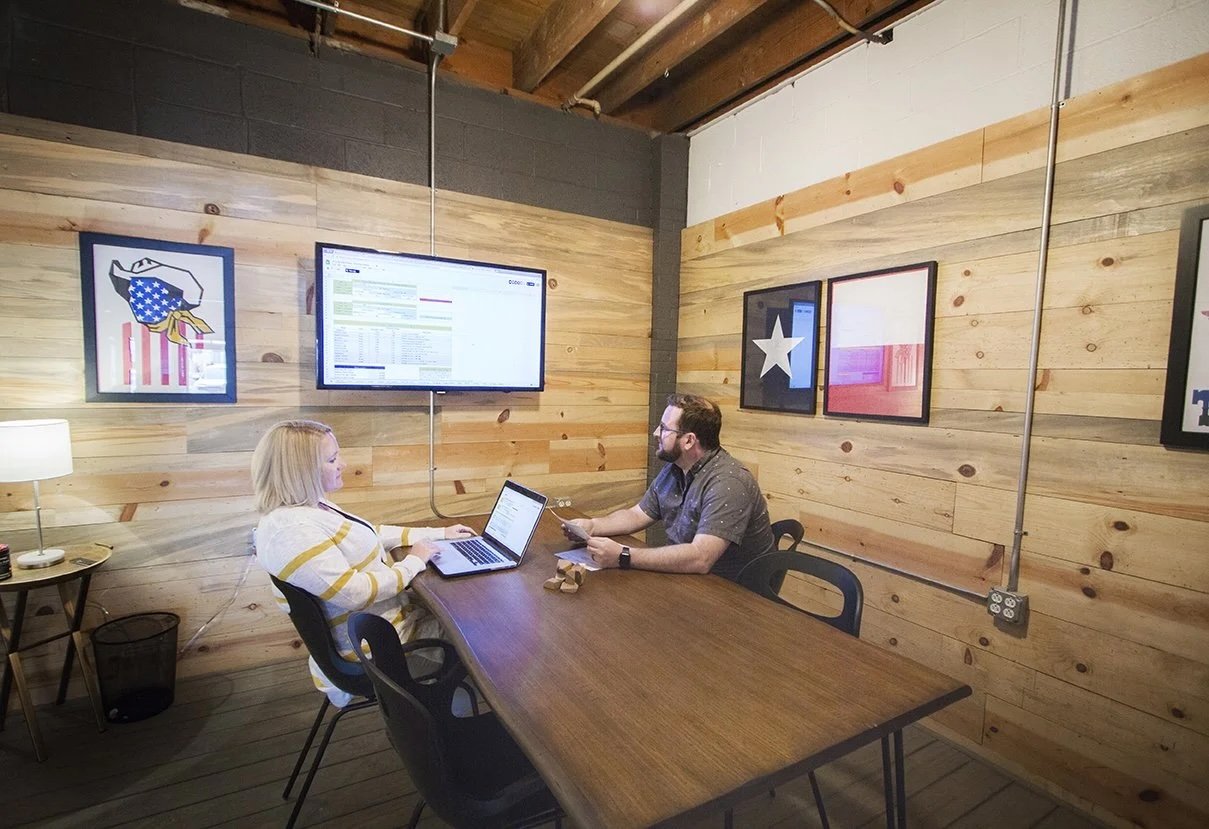
Matt recommends operators reframe how they think about mail as a service.
"Mail is a two-lane street," he says. "It can be lead generation that turns into members, where someone comes in for mail and then needs a physical spot. It can also work in reverse, where an office renter needs a mail service. Both directions are an opportunity."
His next piece of advice is blunter, and it's about expectations.
"The advice that stuck with me early was to work on pro formas, so you have an approximation of how the math is going to math," Matt says. "Have reasonable expectations. I never got into this thinking I'd make five million dollars a year. That was never the goal."
He treats the business for what it is.
Matt explains, "This is a lifestyle business that lets me meet people and put a little money in my pocket. I still work full time, and I'm not quitting my day job."
He's equally direct about the realities of a smaller footprint.
"If you're running a space under seven or eight thousand square feet, you'll have to operate it yourself," Matt says. "You won't staff it at that size. A full-time employee eats any money you'd make on a smaller space, so you have to get creative."
That constraint is exactly why the services he keeps have to run with so little of his attention.
The throughline in his advice is the same instinct that saved the business in his first months as owner.
"At a recent Global Workspace Association conference, I spent my time gleaning insights from the big players and right-sizing them for my space," he says. "They might do something that costs ten thousand dollars, which is a non-starter for me. So, I take the bits and pieces I can operationalize and use them to add a little delight for my members."
Then he tests.
"Every time I have an opening, I try the next experiment,” Matt explains. “For example, I consider whether a room can be turned into a podcast studio. I'll throw it in there for three months. If it doesn't work, great. If it does, I invest more and make it viable."
Matt's story works because he never pretends to be a flagship operator. He runs three locations on the side, in a market that doesn't generate big-city revenue, with no full-time staff to lean on.
Mail still earns him a dependable monthly buffer and brings him customers he didn't have to chase.
He got there by cutting three providers down to the one that does the operational work for him and screens the people it sends his way, which is the only kind of service that fits a business he runs in his spare hours.
Ready to get started with iPostal1? Contact us today to start building a new revenue stream for your workspace with digital mailbox solutions.